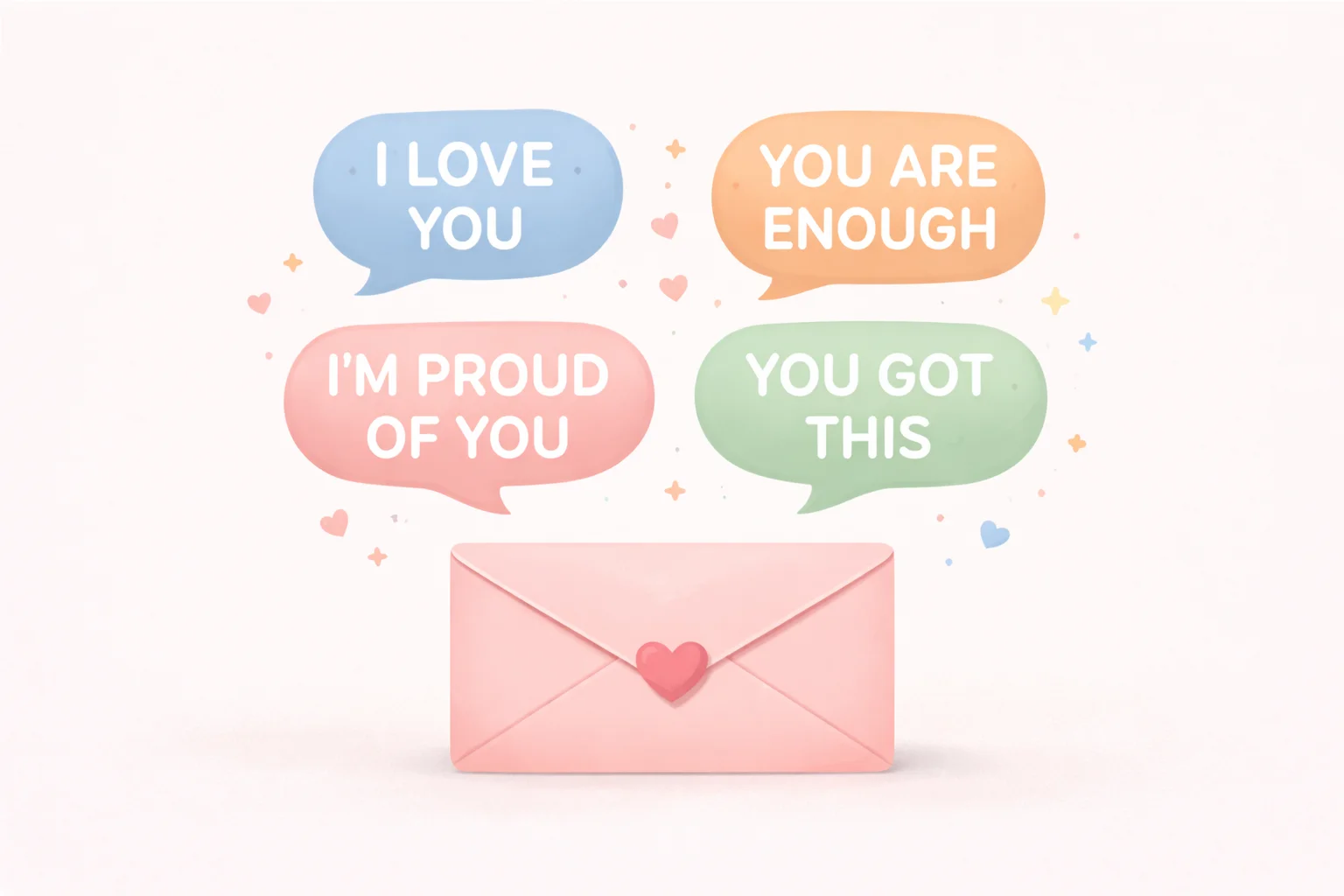
Some people feel most loved when they hear it. A sincere "I appreciate you," a simple "I'm proud of you," or even a text that says "Thinking of you" can mean everything to someone whose love language is words of affirmation.
If you've ever wondered why certain people light up when you compliment them, or why some relationships feel distant despite doing all the "right" things, understanding this love language might be the missing piece.
What Are Words of Affirmation?
Words of affirmation are verbal or written expressions of love, appreciation, encouragement, and support. They're one of the five love languages identified by Dr. Gary Chapman, which describe the different ways people give and receive love.
[1]Put simply: if this is your love language, you feel most loved and valued when you hear it spoken. What someone says to you matters as much as, or more than, what they do.
Words of affirmation can include:
- Compliments: "You look beautiful today."
- Appreciation: "Thank you for everything you do for our family."
- Encouragement: "I believe in you. You've got this."
- Love: "I love you" or "I'm so lucky to have you."
- Recognition: "I noticed how hard you worked on that."
What makes words of affirmation powerful isn't just saying nice things. It's communicating that you see someone, value them, and want them to know it.
Understanding the Words of Affirmation Love Language
In Chapman's framework
[1], everyone has a primary love language, the way they most naturally feel loved. The five love languages are:
- Words of affirmation
- Acts of service
- Receiving gifts
- Quality time
- Physical touch
If someone's primary love language is words of affirmation, they feel most connected when their partner, family, or friends express love verbally. A thoughtful compliment or heartfelt "I love you" fills their emotional tank in a way that other expressions might not.
This doesn't mean other gestures don't matter. But for words of affirmation people, hearing the words is what makes love feel real.
Signs Someone's Love Language Is Words of Affirmation
You might recognize this love language in someone who:
- Lights up when you compliment them
- Remembers kind things you've said, even years later
- Feels hurt by criticism or harsh words more than others might
- Frequently tells you how much you mean to them
- Asks questions like "Do you still love me?" or "Are you proud of me?"
- Saves cards, texts, and notes you've written them
If this describes someone you love, or if this describes you, words of affirmation are likely central to how you experience connection.
Why Words of Affirmation Matter in Relationships
Words carry weight. The things we say to our partners, children, friends, and family shape how they feel about themselves and about us.
For people whose love language is words of affirmation:
- Affirming words build security. Hearing "I love you" or "I'm committed to us" creates emotional safety.
- Encouragement fuels confidence. Knowing someone believes in them helps them believe in themselves.
- Appreciation deepens connection. Feeling seen and valued strengthens the bond.
- Silence can feel like rejection. When affirming words are absent, they may feel unloved, even if you show love in other ways.
Research supports this: when we feel that our partner is responsive and appreciative, we become more open, more willing to grow, and more connected.
[2] When we feel valued by the people we love, everything else gets easier.
Examples of Words of Affirmation
Here are words of affirmation examples organized by relationship. These are phrases you can speak, text, or write to the people you love.
Words of Affirmation for Your Partner
These phrases express love, appreciation, and commitment:
- I love you exactly as you are.
- I'm so grateful I get to do life with you.
- You make me feel safe just by being here.
- I notice how hard you work, and I appreciate you.
- You're the first person I want to tell good news to.
- Thank you for being patient with me.
- I believe in you, even when you doubt yourself.
- I love who I am when I'm with you.
- You bring out the best in me.
- I feel lucky to know you this deeply.
- I'm proud of the life we're building together.
- You make even ordinary days feel special.
- I love the way you see the world.
- Being with you feels like home.
- I choose you, today and every day.
Words of Affirmation for Family
Family bonds grow stronger when we express appreciation out loud:
- I love you exactly as you are.
- You make our family better.
- I'm proud of the person you're becoming.
- I see how hard you're trying, and it matters.
- Thank you for being you.
- You are loved, no matter what.
- I'm grateful for the time we have together.
- You bring joy wherever you go.
- I notice how much you care about others.
- Our family feels steady because of the love you give.
- I love what makes us unique.
- I'm proud of what we're building together.
- The little moments with you mean everything.
- I'm always here for you, no matter what.
- You can always count on me.
Words of Affirmation for Friends
Friendships thrive when we speak our appreciation:
- I'm so glad you're in my life.
- You're the kind of friend everyone deserves.
- Thank you for showing up for me.
- You inspire me more than you know.
- I love that I can be fully myself around you.
- You make hard days easier just by being there.
- I'm proud to call you my friend.
- I trust you completely.
- You always know how to make me laugh.
- I admire your courage to be yourself.
- I'm grateful for friends who push me to be better.
- My friendships help me become my best self.
- You bring real joy into my life.
- I show up for you, and you show up for me.
- I'm thankful for the people who stay.
Words of Affirmation for Children
Children especially need to hear affirming words:
- I love spending time with you.
- Your ideas are important to me.
- I'm proud of you for trying.
- I love the way your mind works.
- You make our family happier.
- I believe in you.
- Your feelings matter.
- I love hearing what you think.
- You are enough, just as you are.
- You are so creative.
- I'm so glad you're my child.
- You make me smile every day.
- I love watching you learn new things.
- You are brave, and I'm proud of you.
- I will always be here for you.
How to Give Words of Affirmation
If words of affirmation don't come naturally to you, here's how to practice:
Be Specific
"You're great" is nice, but "I really appreciated how you listened to me last night when I was stressed" lands deeper. Specific words show you're paying attention.
Be Genuine
Only say what you actually mean. Empty flattery can feel disingenuous and hurt more than help. Sincerity matters more than eloquence.
Be Timely
Affirm someone close to the moment you notice something, not weeks later. A quick "I appreciated that" in the moment carries more weight than a formal speech later.
Be Consistent
One compliment is good. Regular encouragement builds trust and security. People with this love language need consistent verbal affirmation to feel loved.
Use Their Name
Something about hearing your own name makes words feel more personal. "I love you, Sarah" often lands differently than just "I love you."
Put It in Writing
Leave notes. Send texts throughout the day. Write in cards. For words of affirmation people, written words can be saved and re-read when they need reassurance.
What to Avoid
If someone's love language is words of affirmation, negative words can wound deeply:
- Harsh criticism: One cruel comment can outweigh ten compliments.
- Silence: Withholding words can feel like withholding love.
- Sarcasm that cuts: What you intend as playful might land as hurtful.
- Forgetting important moments: Not acknowledging achievements or special occasions can cause real pain.
Be mindful with your words. For these people, what you say, and what you don't say, matters more than you might realize.
Words of Affirmation for Yourself
This love language works both ways. Speaking kindly to yourself matters too.
If words of affirmation is your love language, your inner critic may hit especially hard. Practicing
positive affirmations and
self-love affirmations can help you give yourself the affirming words you need.
Some examples:
- I speak to myself with love and kindness.
- I am worthy of the same care I give to others.
- I am enough, exactly as I am.
- I am learning to be my own biggest supporter.
- I give myself grace on difficult days.
When you practice self-affirmation, you become more fluent in the language of encouragement, both for yourself and for the people you love.
How Moment Helps You Practice Words of Affirmation
Speaking words of affirmation to others starts with how you speak to yourself. When you practice affirming your own values—connection, presence, gratitude—you become more fluent in the language of encouragement.
Moment includes affirmation collections designed to shift your mindset toward connection:
- Cherish Connections: "I tell the people I love how much they mean to me." "I give my loved ones my complete and focused attention."
- Family Bonding: "I show up for my family with my whole heart." "I tell the people I love how much they mean to me."
- Build Friendships: "I show up for my friends, and they show up for me." "My friendships help me become my best self."
- Practice Gratitude: "Today held small gifts. I choose to notice them."
When these phrases become part of your inner dialogue, speaking words of affirmation to others feels more natural. The language you use with yourself shapes the language you use with everyone else.
With Moment, you can:
- Set gentle daily reminders to practice
- Use Mirror Mode for deeper self-connection
- Choose from collections focused on relationships, gratitude, and love
- Build consistency over time
Want to make words of affirmation a daily practice? Download Moment on iOS or Android.
[1] Chapman, G. The 5 Love Languages: The Secret to Love That Lasts. Northfield Publishing.
https://5lovelanguages.com
[2] Reis, H. T., et al. (2018). Perceived partner responsiveness promotes intellectual humility. Journal of Experimental Social Psychology.
https://www.sciencedirect.com/science/article/abs/pii/S002210311830009X